
WIFFR Silage Trial 2020.3
Effects of a chemical additive THORSIL HAMMER on the fermentation of whole grain crop.
Trial no.: 2020.03-3-35WG
Authors: Fredrik Eide & Madeleine Eide
Time: July 2020 - March 2021
Publication date: 14th of March 2021
Communication: info@wiffr.org

Abstract
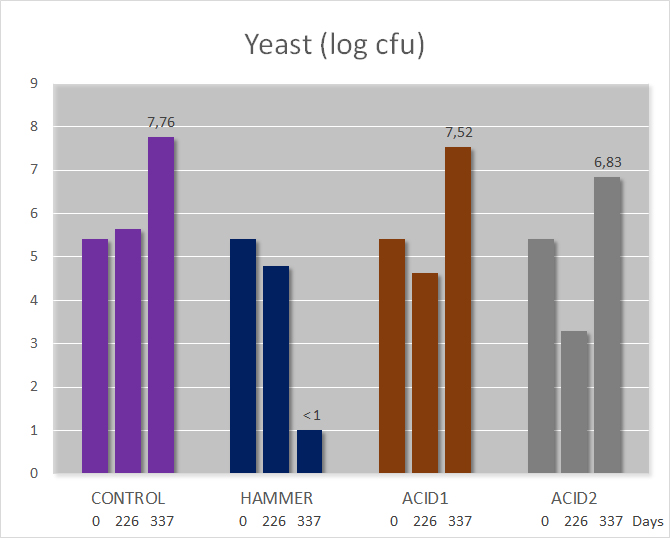
The salt-based silage additive THORSIL HAMMER showed excellent results when ensiling whole grain at a dry matter of 34%. A negative CONTROL, untreated silage, and a positive control, an acid based on formic and propionic acid (ACID), where used. HAMMER succeeded to lower the pH below 4, was stable during a 7-days aerobic stability stress period and had low weight losses. The CONTROL succeeded to lower the pH to almost 4 but was unable to withstand aerobic stress and heated after 44 hours.
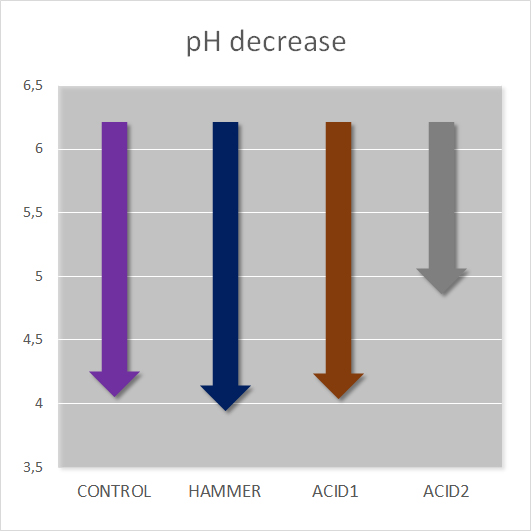
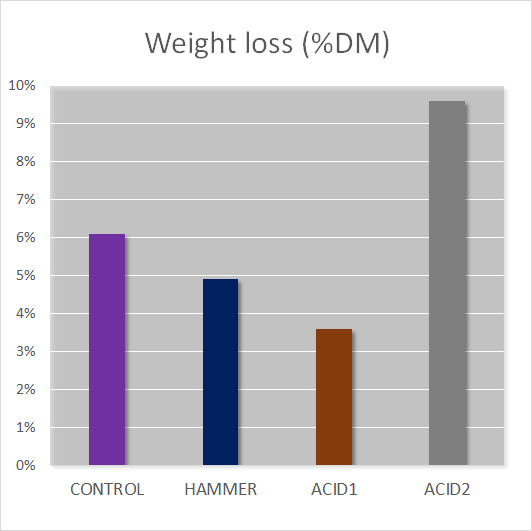
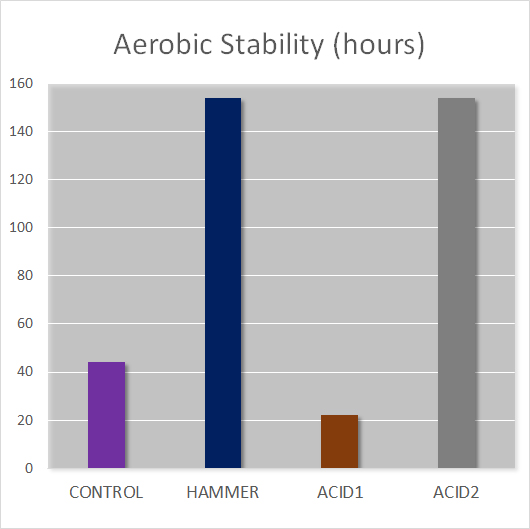
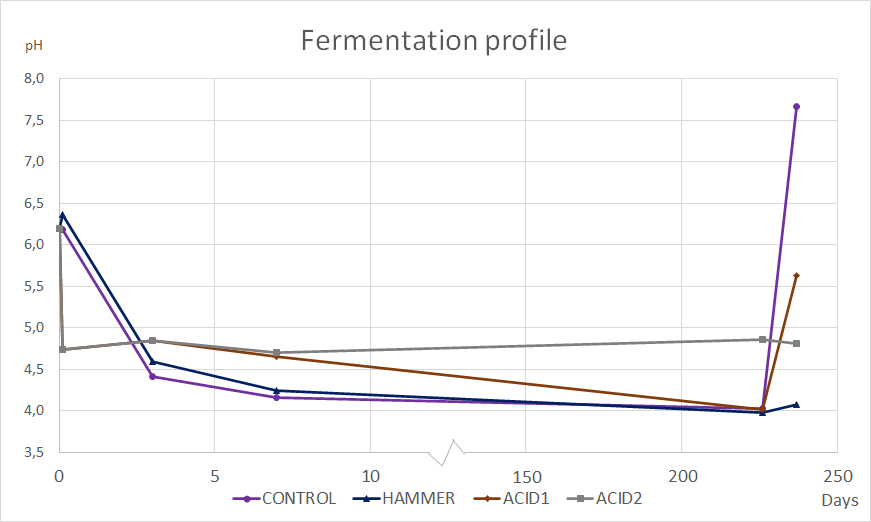
Figure 4: The fermentation profile shows the pH development for all silages. ACID lowers the pH immediately at application. However, the silage is left unprotected and half of the replicates started a secondary fermentation, degrading the silage. The other half produced a low pH, but couldn't withstand the aerobic stress, see fig 3 & 5. HAMMER showed stability during the fermentation as well as during the aerobic stress.
Results
The salt-based silage additive THORSIL HAMMER improved silage quality and aerobic stability compared to CONTROL. The positive control consisting of formic and propionic acid was divided in two parts. The part which performed as good as HAMMER during fermentation could not withstand the aerobic test and heated fastest of all replicates. The other part was spoiled during the fermentation.