WIFFR Silage Trial 2020.5

Silage trial on Maize comparing untreated with chemical additives and an inoculant with citric acid.

Trial no.: 2020.05-4-37M
Authors: Fredrik Eide & Madeleine Eide
Time: October 2020 - June 2021
Publication date: 12th of July 2021
Communication: info@wiffr.org

Image
Abstract

Maize was harvested on October 25 in southern Sweden and chopped with a KRONE BIG X 600. A total of 4 stages were ensiled, untreated (Untreated control), Thorsil-M, Thorsil-N (with Nitrite) and a Homofermentative LAB + Citric acid. The purpose was to see how chemical additives with and without nitrite effects the fermentation and aerobic stability. A secondary aim was to see the effects of a homofermentative Lactic Acid bacteria works if citric acid is added.
Image
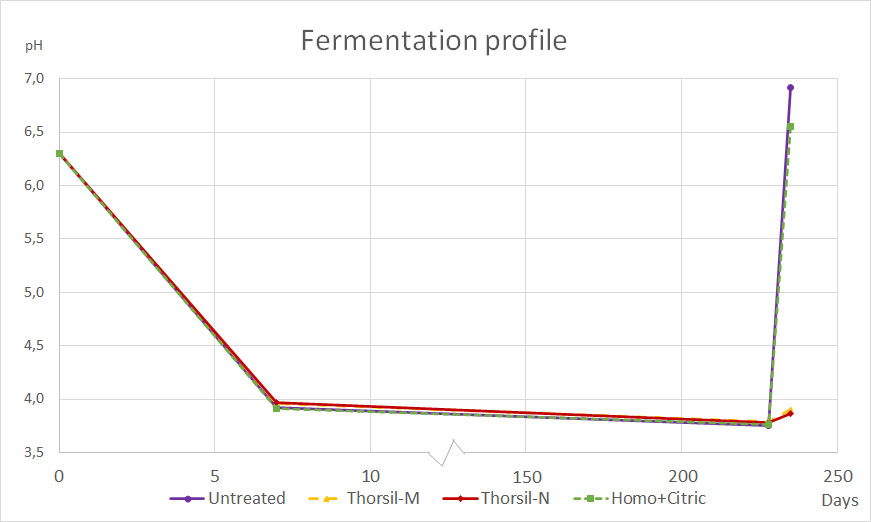
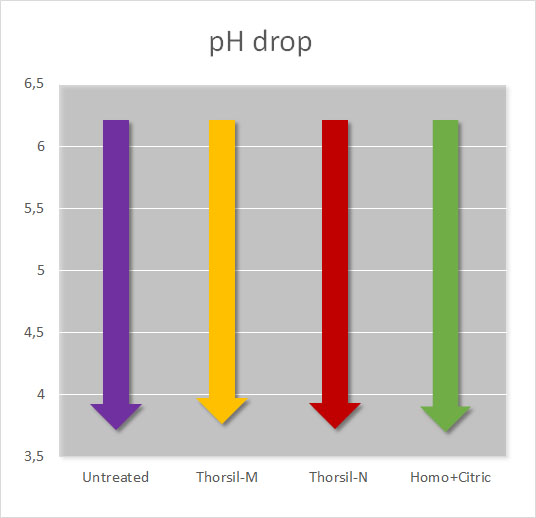
Figure 1: All treatments lowered the pH well below 4 during the fermentation phase.
Image
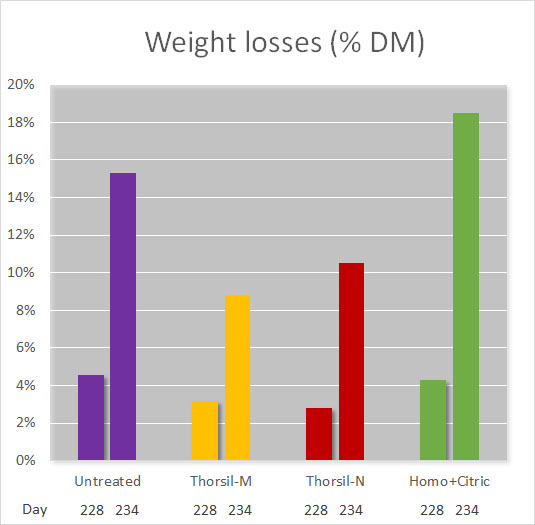
Figure 2: Whight losses during fermentation before opening silo.
Image
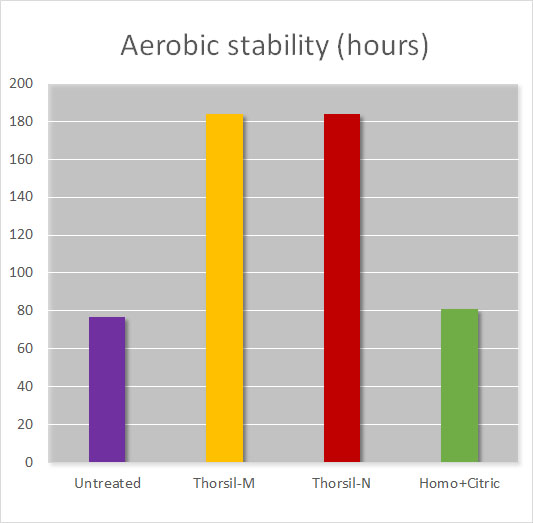
Figure 3: Thorsil-M and Thorsil-N shows excellent results during aerobic stability test, while untreated control and Homo+Citric acid is heating after 77 resp. 81 hours.
Image
Figure 4: The pH drop is usually very fast and many times all treatments end up with a low pH. However, when opening the silo, air can rapidly spoil silages that doesn't have protection against yeast growth. The untreated control and Homo+ Citric rapidly spoild after opening the silo and the pH ended above 6,5.
Image
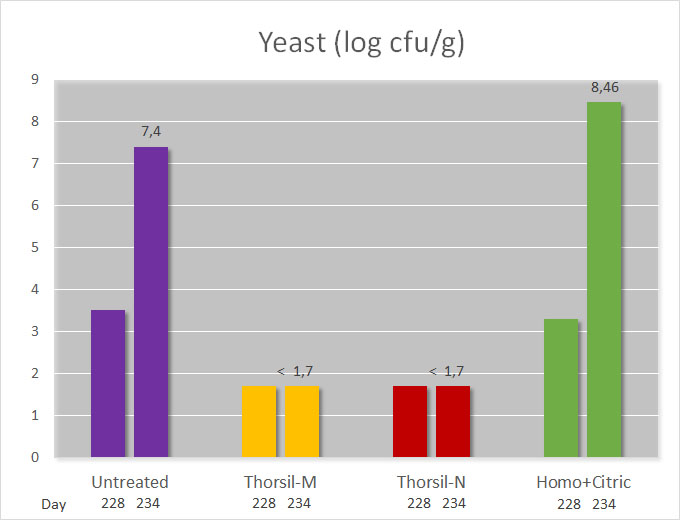
Figure 5: Yeast is one important factor for initiating spoilage. Untreated control and Homo+Citric were exposed to rapid increase in yeasts. Thorsil treatments could inhibit yeasts, which has a positive effect on the quality of silage for the period of testing (6 days).
Results

The salt-based silage additive THORSIL-M and Thorsil-N improved silage quality, weight losses and aerobic stability compared to untreated control. The treatment with an inoculant + added citric acid didn't show any better result than untreated control.

 
World Institute for forage & Feed Research
421 63 Vaestra Froelunda
SWEDEN
info@wiffr.org